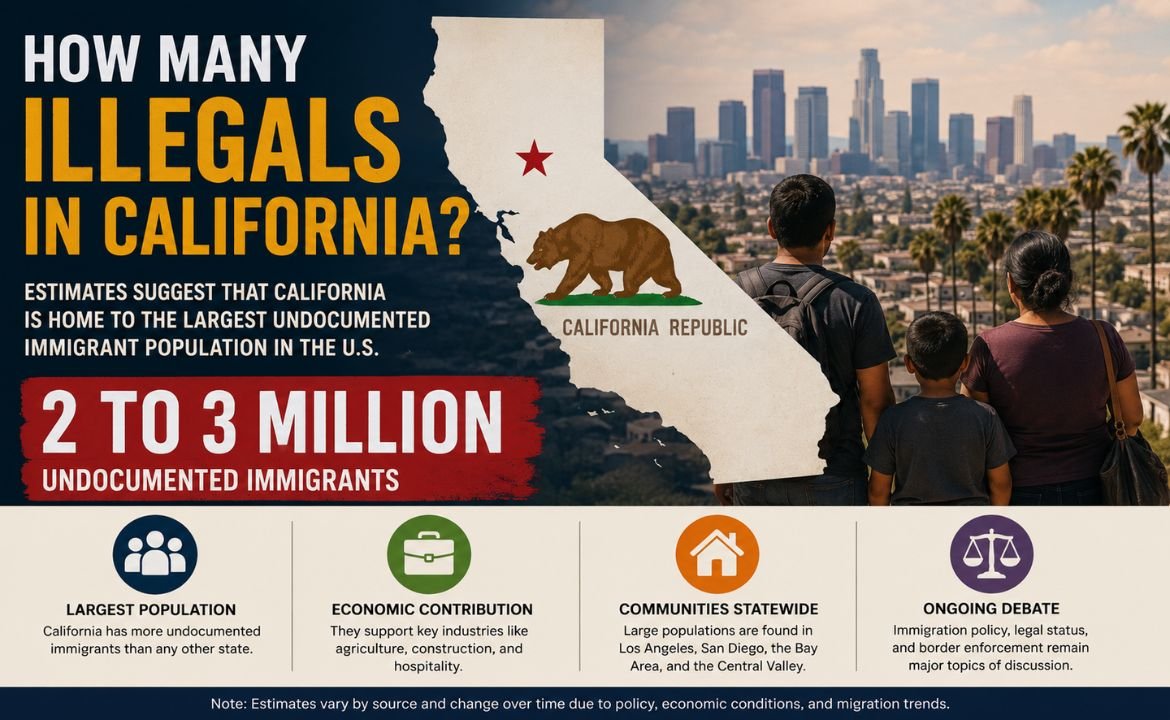
If you’ve been wondering how many illegals in California, you’re certainly not alone. It’s a question many people ask when trying to understand immigration trends and their impact on the state. California has long been known as one of the most diverse places in the United States, attracting people from around the world in search of jobs, education, and a better future. Because of this, conversations about undocumented immigration continue to be a major topic in both politics and everyday life.
Finding an exact number isn’t easy. Undocumented immigrants are not always included in official records in a way that allows for a precise count. Instead, researchers use census information, surveys, and demographic studies to estimate the size of this population.
What Does the Term “Illegals” Mean?
Before looking at the numbers, it’s important to understand the term itself. While many people use the word “illegals” in casual conversation, others prefer phrases such as “undocumented immigrants” or “unauthorized immigrants.”
Generally, these terms describe people who are living in the United States without legal immigration status. This may include individuals who entered the country without authorization or those who remained after their visas expired.
The language used often depends on personal, political, or legal viewpoints. Regardless of the wording, the goal is usually to understand the population and its role within society.
Estimated Number of Undocumented Immigrants in California
California is believed to have the largest undocumented immigrant population in the country. Over the years, demographic experts and research organizations have consistently estimated that millions of undocumented residents live in the state.
Although the exact number changes over time, most estimates place the population somewhere between two and three million people. These figures can rise or fall due to economic conditions, immigration policies, border activity, and changes in legal status programs.
Why Do Estimates Vary?
You may notice that different studies provide slightly different numbers. That’s because researchers use different methods when calculating estimates.
Several factors can influence the results, including:
- Differences in research techniques
- Census participation rates
- Migration patterns
- Family growth and birth rates
- Changes in immigration status
Since there is no official count, estimates are updated as new information becomes available.
Why California Has Such a Large Undocumented Population
Several factors help explain why California has a larger undocumented population than any other state.
A Strong and Diverse Economy
California has one of the world’s largest economies. Industries such as agriculture, construction, healthcare, hospitality, and technology create a constant demand for workers.
Many immigrants move to California hoping to find employment opportunities and improve their quality of life.
Location Matters
California shares a border with Mexico, making it one of the primary entry points for migration into the United States. Its geographic position has influenced immigration patterns for generations.
Established Communities
Many immigrants already have family members, friends, or cultural communities living in California. These existing support networks often encourage newcomers to settle in the same areas.
Where Undocumented Immigrants Live in California
Undocumented residents live throughout the state, but some regions have larger populations than others.
Los Angeles Area
Los Angeles is home to one of the largest immigrant populations in the nation. Many undocumented residents live and work throughout the region.
San Diego
Because of its location near the U.S.-Mexico border, San Diego has historically been connected to immigration and cross-border travel.
San Francisco Bay Area
The Bay Area attracts people from around the world due to its strong economy, educational institutions, and cultural diversity.
Central Valley
Agriculture is a major part of the Central Valley’s economy. Many immigrant workers help support farming and food production throughout the region.
Economic Contributions of Undocumented Immigrants
When discussing how many illegals in California, many people also want to know how this population contributes to the economy.
Undocumented immigrants play important roles in several industries that depend on a reliable workforce.
Agriculture
California produces a large share of the fruits, vegetables, and nuts consumed across the United States. Farm workers are essential to keeping this industry productive.
Construction
From residential housing projects to major infrastructure developments, construction companies often rely on immigrant labor.
Hospitality and Service Industries
Hotels, restaurants, cleaning services, and other businesses frequently employ immigrant workers who help keep daily operations running smoothly.
Challenges Faced by Undocumented Residents
Living without legal immigration status can create significant challenges.
Limited Job Opportunities
Many employers require legal work authorization. This can make it harder for undocumented individuals to access certain careers and higher-paying positions.
Uncertainty About the Future
Immigration policies can change over time, creating uncertainty for individuals and families who may not know what lies ahead.
Financial Barriers
Limited access to some financial services and government programs can make everyday life more difficult.
The Ongoing Immigration Debate
Immigration continues to be one of the most debated issues in American politics.
Supporters of immigration often point to the economic contributions made by undocumented workers, including labor participation, entrepreneurship, and consumer spending.
Others raise concerns about border security, public resources, and competition within the job market.
As a result, discussions about immigration often involve balancing economic needs, humanitarian concerns, and law enforcement priorities.
How Researchers Estimate the Population
Since there is no official count of undocumented immigrants, researchers rely on several methods to estimate the population.
Census-Based Analysis
Demographic experts compare census information with legal immigration records to estimate how many residents may be living without authorized status.
Statistical Models
Researchers use advanced statistical methods to identify trends and calculate likely population figures.
Migration Data
Border activity, visa overstay information, and long-term migration patterns are also considered when creating estimates.
Together, these methods help provide a clearer picture of the undocumented population.
What Could Influence Future Numbers?
The size of California’s undocumented population may change in the years ahead.
Immigration Reform
New federal immigration laws could create pathways to legal status for some undocumented residents.
Economic Growth
Strong job markets often attract workers seeking new opportunities.
Border Enforcement Policies
Changes in border management and immigration enforcement can affect migration patterns.
Population Trends
Shifts in demographics, labor demands, and family growth will continue to shape California’s future.
Conclusion
The question of how many illegals in California remains a topic of widespread interest. While an exact figure is difficult to determine, most researchers agree that California is home to millions of undocumented immigrants. Their presence has a noticeable impact on the state’s workforce, economy, and communities.
Disclaimer
The information provided in this article is intended for general informational and educational purposes only. The content published by WorldMedia is based on publicly discussed estimates, general research interpretations, and widely available demographic analysis. However, exact figures regarding undocumented populations may vary and cannot be independently verified with complete accuracy due to the nature of available data sources.