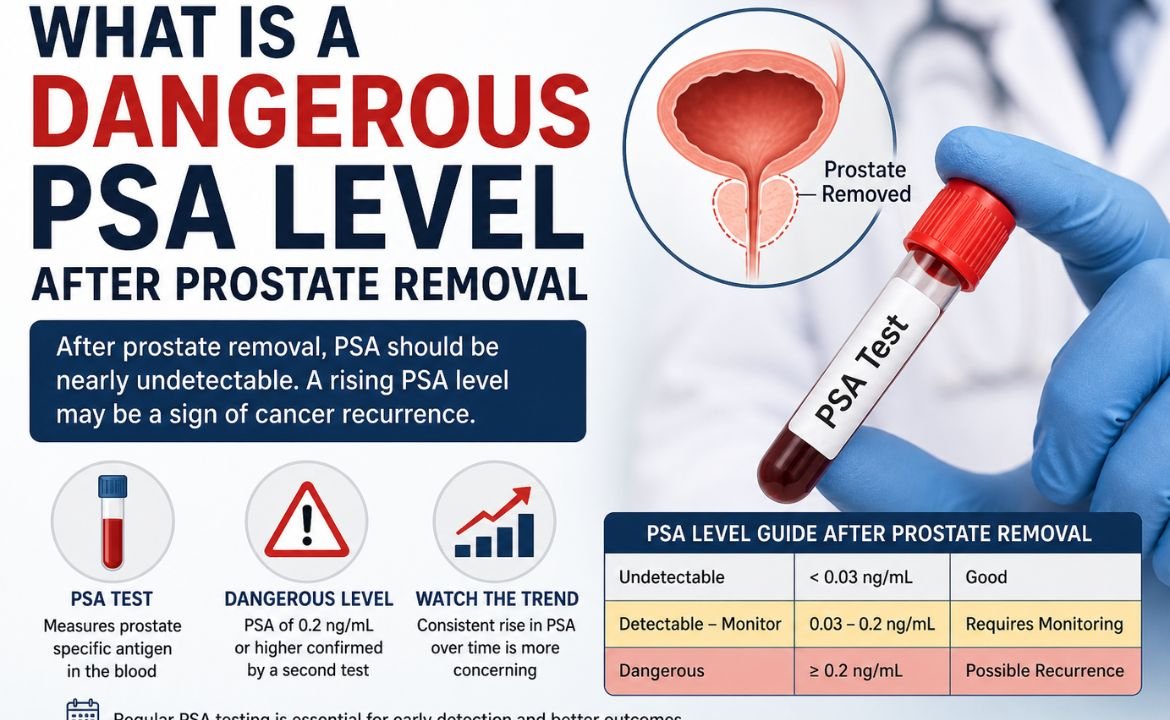
Understanding what is a dangerous PSA level after prostate removal can feel overwhelming, especially during recovery from prostate cancer surgery. After a prostatectomy, PSA (prostate-specific antigen) levels are expected to drop very close to zero. So, it’s natural to worry if the numbers start to rise again. Still, not every increase means something serious is happening. What matters most is understanding the pattern, the numbers, and what your doctor is looking for.
What Is PSA and Why It Matters
PSA is a protein made by prostate cells. Doctors measure it with a simple blood test. Before surgery, PSA levels can help detect prostate cancer or other prostate-related issues.
Once the prostate is removed, the body should produce almost no PSA. That’s why PSA becomes such a useful marker after surgery. Even a small amount can give doctors important clues about what’s going on inside the body, especially when trying to understand what is a dangerous psa level after prostate removal.
Expected PSA Levels After Prostatectomy
Immediate Post-Surgery PSA
In the weeks following surgery, PSA levels usually drop quickly. Most men will see their PSA fall below 0.1 ng/mL. In many cases, it becomes so low that it’s considered “undetectable,” often below 0.03 ng/mL depending on the test used.
Stable PSA Levels
When PSA stays undetectable over time, it’s a reassuring sign. It generally means there are no active prostate cancer cells producing PSA in the body.
What Is Considered a Dangerous PSA Level?
Rising PSA After Surgery
Concern usually begins when PSA starts rising after it had previously dropped to very low levels. Doctors call this biochemical recurrence, which simply means PSA is increasing again.
Threshold for Concern
In most cases, doctors consider PSA levels concerning when:
- PSA reaches 0.2 ng/mL or higher, and
- The result is confirmed with a second test
A one-time slight increase may not mean much. However, if PSA continues to rise over time, it becomes more important to investigate further.
PSA Doubling Time: Why It’s Important
What Is PSA Doubling Time?
PSA doubling time refers to how quickly the PSA level increases. Instead of just looking at one number, doctors also look at how fast it’s changing.
Why It Matters
- Less than 6 months: May suggest a more aggressive return of cancer
- 6 to 12 months: Needs careful and regular monitoring
- More than 12 months: Often indicates slower progression
Even a low PSA level can be concerning if it’s rising quickly. On the other hand, a slightly higher level that stays stable may be less worrying.
Why PSA Levels May Rise After Surgery
Remaining Cancer Cells
Sometimes, tiny cancer cells remain in the body after surgery. These cells can grow over time and begin producing PSA again.
Local Recurrence
Cancer can come back in the same area where the prostate was removed. This is called local recurrence.
Spread to Other Areas
In some cases, cancer may spread beyond the prostate area, such as to bones or lymph nodes. This is less common but more serious.
How PSA Is Monitored After Surgery
Regular Testing
Doctors usually recommend regular PSA testing:
- Every 3 to 6 months during the first few years
- Then every 6 to 12 months later on
These routine checks help catch any changes early.
Looking at Trends
Doctors don’t rely on a single PSA reading. Instead, they look at trends over time. A slow, steady rise may be handled differently than a rapid increase.
When Doctors Take Action
Confirming a Rise
If PSA reaches 0.2 ng/mL or higher, your doctor will likely repeat the test. Two confirmed readings at or above this level usually mean further evaluation is needed.
Additional Testing
If there’s concern about recurrence, imaging tests may be used to find where cancer cells might be located.
Treatment Options If PSA Rises
Radiation Therapy
Radiation can target any remaining cancer cells, especially if the recurrence is local.
Hormone Therapy
Hormone therapy works by lowering testosterone levels, which prostate cancer cells depend on to grow.
Combined Treatments
Sometimes, doctors recommend a combination of treatments to improve results, depending on the situation.
Supporting Your Health During Recovery
Medical care is essential, but daily habits also matter.
Eat Well
A diet rich in vegetables, fruits, and whole grains can support overall health.
Stay Active
Regular exercise can help improve energy levels and recovery.
Manage Stress
Simple practices like walking, deep breathing, or talking to someone you trust can help reduce anxiety.
Common Misunderstandings About PSA
Not Every Increase Is Serious
Small PSA changes can happen. Lab variations or minor fluctuations don’t always signal a problem.
Patterns Matter More Than One Result
Doctors focus on how PSA changes over time, not just a single number.
Emotional Side of PSA Monitoring
Watching PSA levels can be stressful. Many men feel anxious before test results. That’s completely understandable. Talking with family, joining a support group, or staying in close contact with your doctor can make this process easier to manage.
Key Points to Remember
- PSA should drop to very low or undetectable levels after surgery
- A level of 0.2 ng/mL or higher may signal recurrence if confirmed
- PSA doubling time helps assess how serious the situation may be
- Regular testing is important for early detection
- Effective treatments are available if PSA begins to rise
Final Thoughts
Knowing what is a dangerous PSA level after prostate removal can help you feel more in control during recovery. While a rising PSA can be worrying, it doesn’t always mean immediate danger. With regular monitoring and the right medical care, many cases can be managed effectively. Always speak with your healthcare provider to understand your specific situation and the best next steps.
Disclaimer
The information provided in this article on WorldMedia is intended for general educational and informational purposes only. It is not meant to serve as medical advice, diagnosis, or treatment. While every effort has been made to ensure the accuracy and reliability of the content, medical knowledge is constantly evolving, and individual health situations can vary widely.